
ONCOSYS-OVA
Systems Oncology Approach to Optimize Ovarian Cancer Treatment | NCT06117384
ONCOSYS-OVA is a prospective ovarian cancer follow-up study conducted jointly by Helsinki University Hospital (HUS) and the University of Helsinki. The aim of the study is to develop even better treatment practices as well as more personalized and effective therapies for ovarian cancer patients in the future. Patients’ participation, together with the biological samples and clinical data they provide, forms the valuable foundation of our research.
All patients referred to HUS for surgical treatment with suspected ovarian, fallopian tube, or peritoneal cancer may participate in the ONCOSYS-OVA study. During treatment, tissue, blood, and peritoneal fluid samples are collected, together with clinical data related to the patient’s care. These data are used to study the biological characteristics of cancer and to understand how tumors develop, grow, and respond to treatments.
The study does not directly affect the treatment each patient receives. However, it may identify findings relevant to treatment that can be communicated to the treating physician. For more information about participation, please contact your treating physician or nurse. Further information about the study is available from the principal investigator, Anniina Färkkilä (anniina.farkkila@hus.fi).
An HRD test developed through the study to support patient care
Ovarian cancer is characterized by defects in DNA repair, particularly in homologous recombination (HR), which is the cell’s primary DNA repair mechanism. HR-deficient (HRD) tumors, which account for approximately 40% of high-grade serous carcinomas, are also sensitive to new targeted PARP inhibitor therapies. Based on this, we developed an HRD test optimized for ovarian cancer, called ovaHRDscar. The purpose of the test is to identify HRD tumors.
The test is performed using a tumor tissue sample obtained either during surgery or through an ultrasound-guided needle biopsy. The HRD test analyzes DNA alterations in the tumor using advanced computational methods. Through this approach, we identified genetic features specific to ovarian cancer, enabling us to improve the reliability of the test. By combining genetic data with real-world follow-up data collected from ONCOSYS-OVA patients, we have gained valuable insights into the reliability of the test and improved our understanding of ovarian cancer.
With this optimized HRD test, we are better able to identify patients who are likely to benefit from PARP inhibitor therapy and those who are not. This makes it possible to target treatment for the patients who benefit most while avoiding unnecessary drug treatments and their associated side effects. Our HRD test has already been used in healthcare for several years and has benefited the treatment of many patients.
Over 600 patients in the ONCOSYS-OVA study
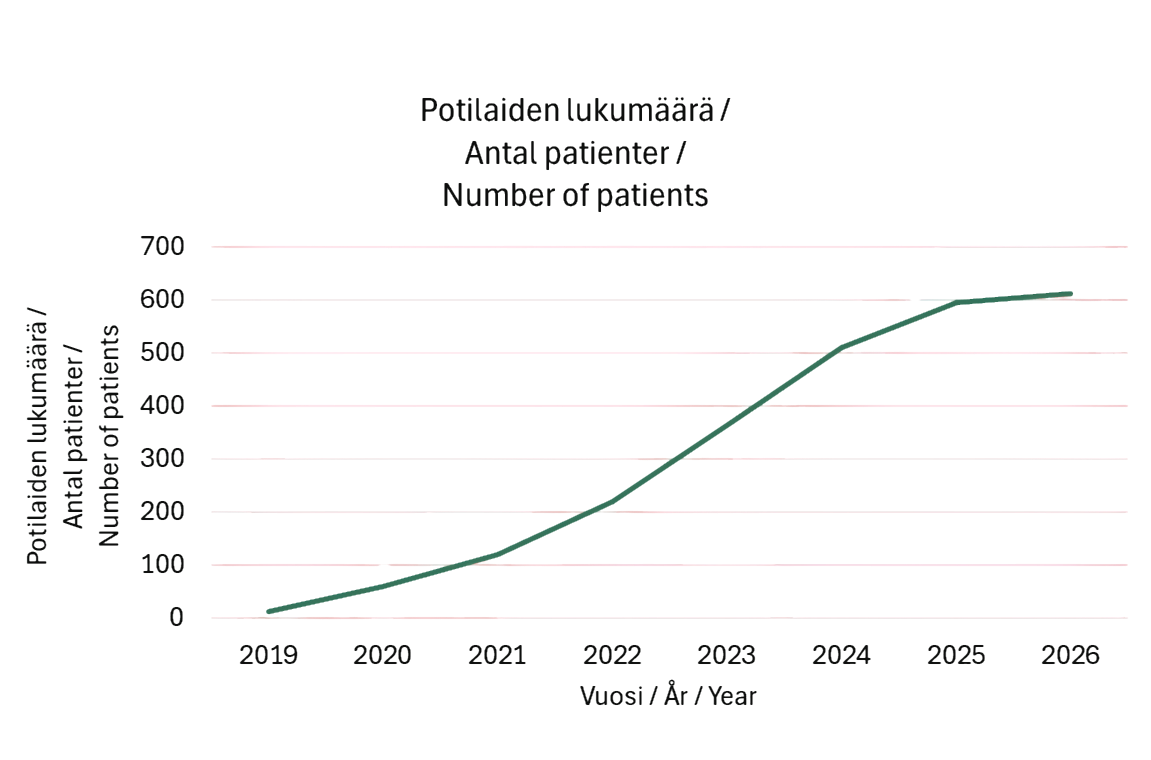
As of 1 February 2026, the ONCOSYS-OVA study had enrolled more than 600 participants. Recruitment of new study participants remains ongoing.
Clinical contact information
HUS Women's Clinic
Website: HUS Gynecology and Obstetrics